

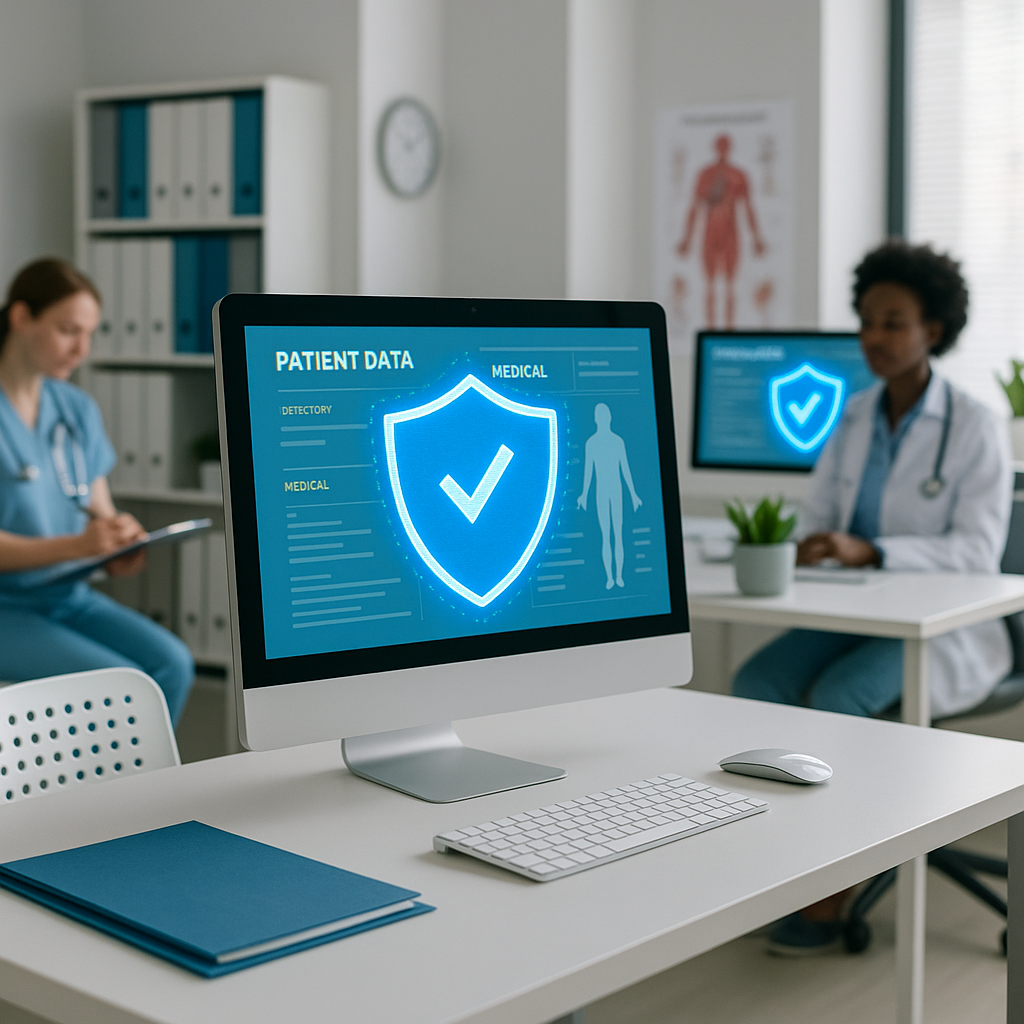
In healthcare, a single data breach can cost your small business millions and destroy patient trust—but implementing the right cybersecurity essentials can transform your practice into a fortress of protection while fueling sustainable growth.
Why Healthcare Small Businesses Are Prime Targets for Cyberattacks
Healthcare small businesses face an alarming reality: they're increasingly becoming the preferred targets of cybercriminals. Unlike large hospital systems with dedicated IT security teams, small practices often lack the resources and expertise to implement robust cybersecurity measures. This vulnerability makes them attractive targets for hackers seeking easy access to valuable patient data, which can sell for up to $1,000 per record on the dark web—significantly more than credit card information.
The consequences of a cyberattack extend far beyond immediate financial losses. Small healthcare practices typically store sensitive patient information including medical histories, insurance details, and payment information—all protected under HIPAA regulations. A single breach can result in devastating HIPAA violation fines ranging from $100 to $50,000 per record, potential lawsuits, and mandatory breach notifications that can irreparably damage your practice's reputation. Many small practices never recover from such incidents, with studies showing that 60% of small businesses close within six months of a major cyberattack.
Leveraging fractional CIO and CISO strategies can provide small healthcare businesses with enterprise-level security expertise at a fraction of the cost. These professionals bring strategic oversight and technical knowledge that would otherwise be unaffordable for small practices. Additionally, partnering with micro-influencers in the healthcare and cybersecurity space can help educate your patient base about your security commitments, building trust and differentiating your practice from competitors who may be less transparent about their data protection measures.
Building Your HIPAA-Compliant Cybersecurity Foundation
Establishing a HIPAA-compliant cybersecurity foundation begins with understanding that compliance isn't just a legal obligation—it's a business imperative that protects your practice's viability. The foundation starts with conducting a comprehensive risk assessment to identify where Protected Health Information (PHI) exists within your systems, who has access to it, and what vulnerabilities might expose it to unauthorized access. This assessment should examine both digital and physical security measures, from electronic health records to paper files in storage.
A fractional CISO can be invaluable in this phase, bringing specialized knowledge of HIPAA requirements and healthcare-specific threats without the six-figure salary of a full-time executive. They can develop tailored policies and procedures that address the HIPAA Security Rule's administrative, physical, and technical safeguards while remaining practical for your small business operations. This includes implementing access controls, establishing audit trails, creating incident response plans, and ensuring business associate agreements are in place with all vendors who handle PHI.
Documentation is critical to HIPAA compliance, and this is where fractional leadership truly shines. Your fractional CISO can establish systematic documentation processes that demonstrate your practice's ongoing commitment to security without overwhelming your staff. Furthermore, using micro-influencer marketing to communicate your security certifications and compliance efforts can position your practice as a trusted healthcare provider. Local healthcare micro-influencers can authentically share your practice's commitment to patient privacy, reaching engaged audiences who value data protection and helping you attract privacy-conscious patients.
Essential Security Tools Every Healthcare Practice Needs
Implementing the right security tools is non-negotiable for healthcare small businesses, but knowing which tools to prioritize can be overwhelming. At minimum, every practice needs enterprise-grade antivirus and anti-malware software across all devices, a properly configured firewall to monitor incoming and outgoing network traffic, and encrypted communication channels for any electronic PHI transmission. Email security solutions with advanced phishing detection are particularly critical, as 90% of healthcare data breaches begin with phishing attacks targeting unsuspecting staff members.
A fractional CIO can strategically select and integrate security tools that fit your budget and technical capabilities while providing maximum protection. Essential tools include: multi-factor authentication (MFA) for all systems accessing PHI, automated backup solutions with both local and cloud-based redundancy, patch management systems to ensure all software remains current, and endpoint detection and response (EDR) solutions that can identify and neutralize threats in real-time. Virtual Private Networks (VPNs) are crucial for any remote access to your systems, and encryption software should protect data both at rest and in transit.
Beyond implementation, a fractional CIO ensures these tools work together cohesively rather than creating security gaps or operational inefficiencies. They can also guide investments in security information and event management (SIEM) systems that provide centralized monitoring and alerting. To maximize the value of these investments, consider partnering with micro-influencers who specialize in healthcare technology. These influencers can create content showcasing how your practice uses cutting-edge security tools to protect patient data, demonstrating your commitment to innovation and safety. This strategy not only builds patient confidence but also positions your practice as a forward-thinking healthcare provider in your community.
Training Your Team to Become Your First Line of Defense
The most sophisticated security tools in the world cannot protect your practice if your team members inadvertently create vulnerabilities through human error. Comprehensive, ongoing security awareness training is essential, transforming your staff from potential weak links into vigilant defenders of patient data. This training should cover recognizing phishing attempts, creating strong passwords, identifying social engineering tactics, properly handling PHI, understanding clean desk policies, and knowing exactly what to do when they suspect a security incident.
A fractional CISO brings invaluable expertise in developing engaging, healthcare-specific training programs that resonate with clinical and administrative staff alike. Rather than generic corporate training modules, they can create scenarios relevant to your daily operations—such as handling patient requests for medical records, responding to suspicious phone calls claiming to be from insurance companies, or securely accessing patient information from mobile devices. Regular simulated phishing exercises help reinforce training and identify team members who may need additional support, while monthly security briefings keep cybersecurity top-of-mind without causing training fatigue.
Creating a culture of security awareness extends beyond formal training sessions. Empower your team to report suspicious activities without fear of punishment, celebrate employees who identify and prevent potential security incidents, and make security a regular agenda item in staff meetings. Micro-influencer marketing can play a surprising role here as well—partnering with healthcare professionals who have strong social media followings to share security best practices can reinforce your internal training efforts. When your team sees respected voices in the healthcare community emphasizing the same security principles you're teaching internally, it validates your message and strengthens compliance. Additionally, showcasing your team's security certifications and training achievements through micro-influencers humanizes your practice and demonstrates your investment in protecting patient trust.
Turning Cybersecurity Investment Into Competitive Advantage
While many small healthcare businesses view cybersecurity as a necessary expense, forward-thinking practices recognize it as a powerful competitive differentiator. In an era where data breaches dominate headlines and patients are increasingly concerned about privacy, demonstrating robust security measures can be a compelling reason for patients to choose your practice over competitors. Your cybersecurity investments signal professionalism, reliability, and respect for patient privacy—qualities that resonate deeply with healthcare consumers.
Fractional CIO and CISO strategies enable small practices to access executive-level strategic thinking that transforms security from a cost center into a growth driver. These leaders can help you achieve security certifications and attestations that larger competitors possess, such as HITRUST certification or SOC 2 compliance, making your small practice competitive when bidding for contracts with larger healthcare systems or insurance networks. They can also identify opportunities to leverage your security posture in marketing materials, patient communications, and partnership discussions. The cost-effectiveness of fractional leadership means you're investing in strategic expertise rather than overhead, allowing more resources to flow directly into patient care and practice growth.
Micro-influencer marketing represents the perfect vehicle for communicating your cybersecurity commitment to current and prospective patients. Unlike traditional advertising, micro-influencers—healthcare professionals, patient advocates, or local health and wellness personalities with engaged followings of 10,000-100,000—offer authentic, trusted voices that resonate with specific communities. Partner with micro-influencers to create educational content about healthcare data privacy, feature your practice's security measures in their content, or have them share patient testimonials (with proper consent) about feeling secure at your practice. This strategy is particularly cost-effective for small businesses, as micro-influencers typically charge far less than celebrity endorsers while delivering higher engagement rates and more qualified leads.
The synergy between fractional leadership and micro-influencer marketing creates a powerful competitive moat. Your fractional CISO ensures you have genuinely strong security practices worth promoting, while your fractional CIO can leverage technology to track and measure the ROI of your micro-influencer campaigns. Together, they help you communicate complex technical achievements in accessible ways that build patient trust and drive practice growth. In today's healthcare landscape, cybersecurity isn't just about preventing disasters—it's about building a reputation as a practice that truly values and protects what matters most: your patients' trust and their sensitive health information.